This guide outlines practical best practices for builders, contractors, and designers to ensure decorative wood trusses integrate smoothly into the construction process without causing rework, visual conflicts, or scheduling delays.
What Are Non-Structural, Decorative Wood Trusses?
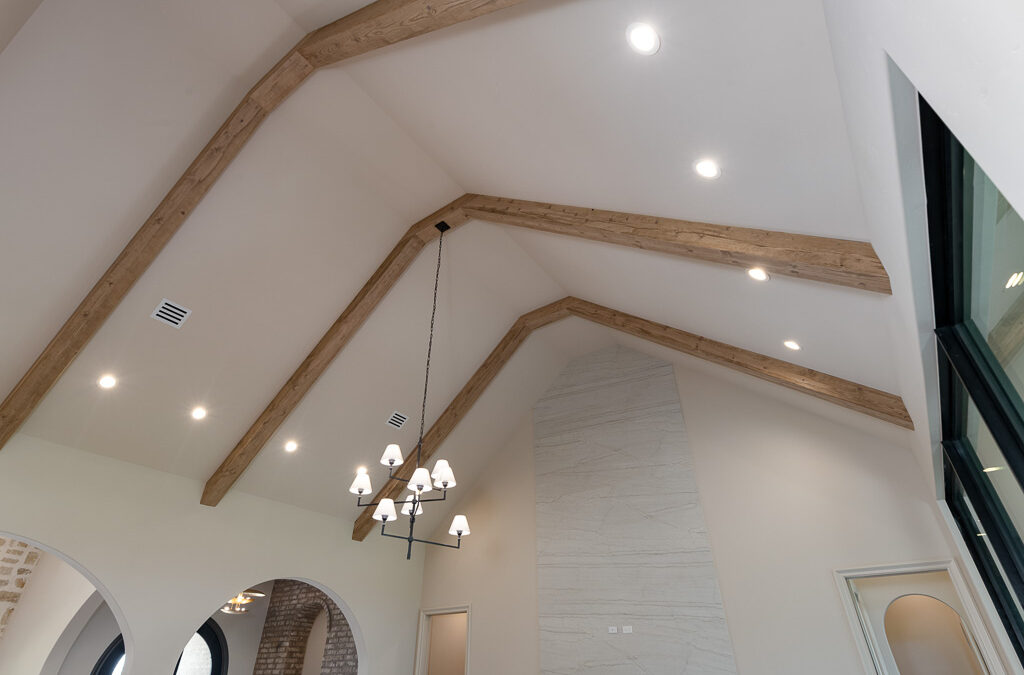
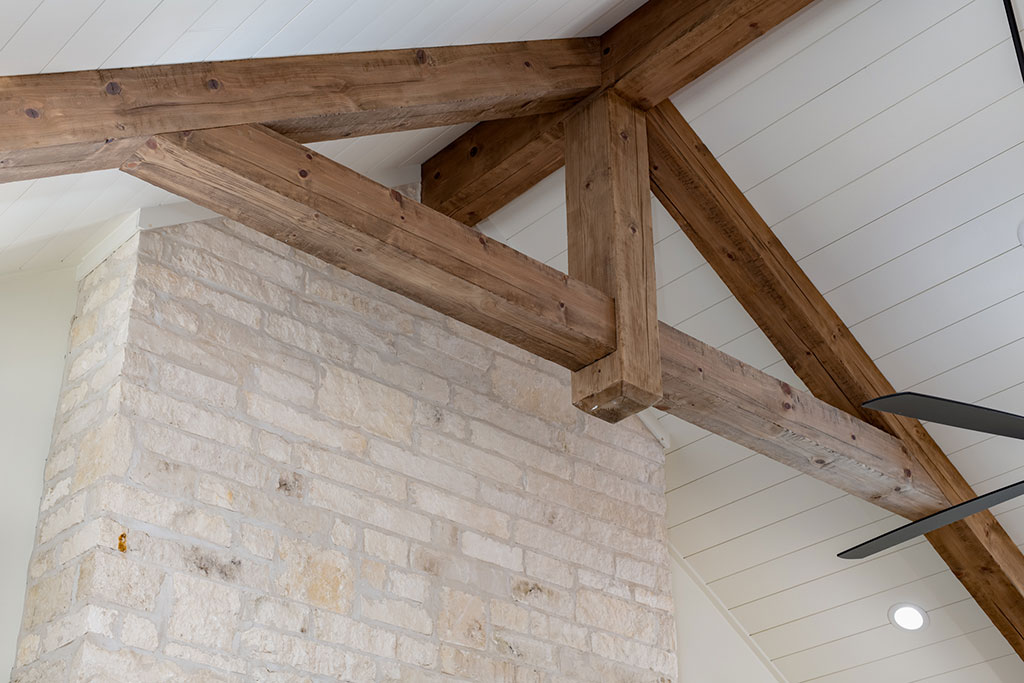
Decorative wood trusses are architectural elements designed to replicate the appearance of traditional timber trusses without serving a structural role. Unlike engineered roof trusses or load-bearing beams, these trusses are installed purely for visual impact and are typically fabricated from lightweight, hollow wood components.
Because they are non-load-bearing, decorative trusses offer far more flexibility in placement, size, and installation timing. However, that flexibility only becomes an advantage when the trusses are coordinated intentionally with the surrounding construction elements.
When to Plan for Decorative Trusses
One of the most common coordination issues arises when decorative trusses are introduced too late in the build process. Even though installation often happens during the finish phase, planning should begin much earlier—ideally during design development or early framing.
Early planning allows the builder and design team to anticipate ceiling conditions, mechanical routes, and lighting layouts before those systems are locked in. This proactive approach reduces conflicts and preserves design symmetry.
Early coordination allows you to:
- Avoid conflicts with ductwork and lighting
- Establish proper blocking and backing
- Confirm spacing and symmetry
- Coordinate ceiling elevations and finishes
Coordinating Decorative Wood Trusses with Drywall
Drywall plays a major role in how decorative trusses ultimately look once installed. Gaps, uneven surfaces, or poor attachment points can undermine the visual impact of even the best-crafted trusses. For that reason, drywall coordination should be intentional—not reactive.
In most cases, decorative trusses are installed after drywall and paint are complete. This sequencing protects the wood finish and ensures the trusses sit cleanly against finished surfaces rather than raw framing.
Best practices include:
- Installing drywall before decorative trusses whenever possible
- Confirming final truss dimensions prior to drywall installation
- Placing backing or blocking at attachment points
- Ensuring ceiling planes are flat and finished to avoid visible gaps
Coordinating Decorative Wood Trusses with Lighting
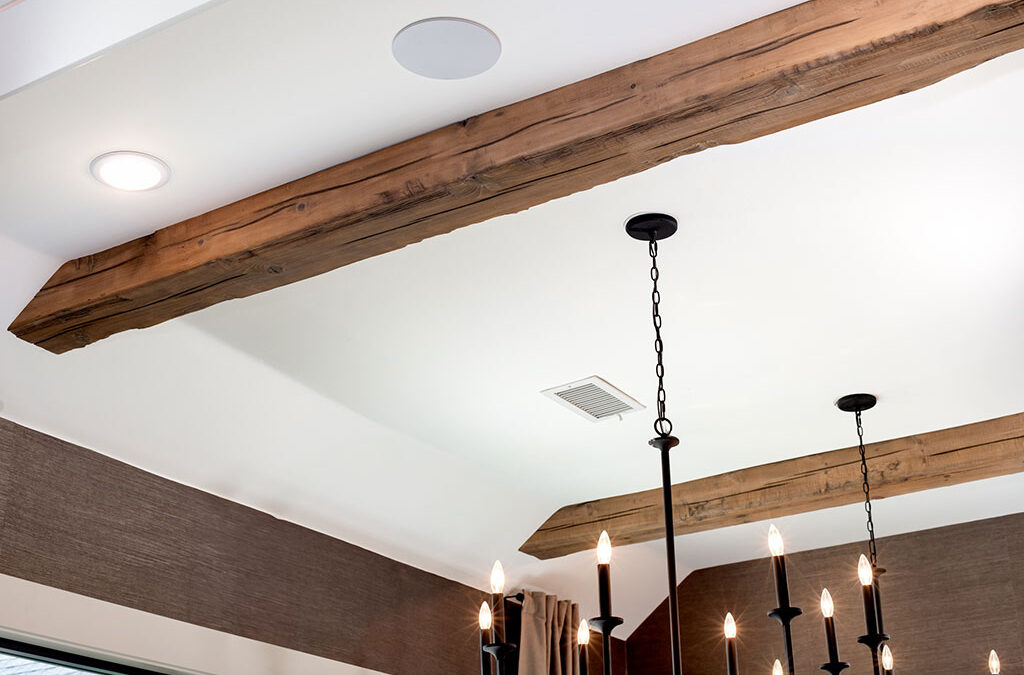
Lighting and trusses must be designed together to avoid visual clutter or awkward placements. Poor coordination can result in recessed lights cutting through truss lines or fixtures landing off-center, disrupting the symmetry that makes trusses effective.
When lighting is planned with trusses in mind, the result feels intentional and balanced. Hollow decorative trusses also provide an added advantage by allowing wiring to be concealed inside the beam itself.
Key considerations include:
- Positioning recessed lights outside truss spans
- Planning beam-mounted fixtures in advance
- Using hollow trusses to conceal wiring for pendants or LEDs
- Maintaining symmetry between lighting and truss layouts
Coordinating Decorative Wood Trusses with HVAC
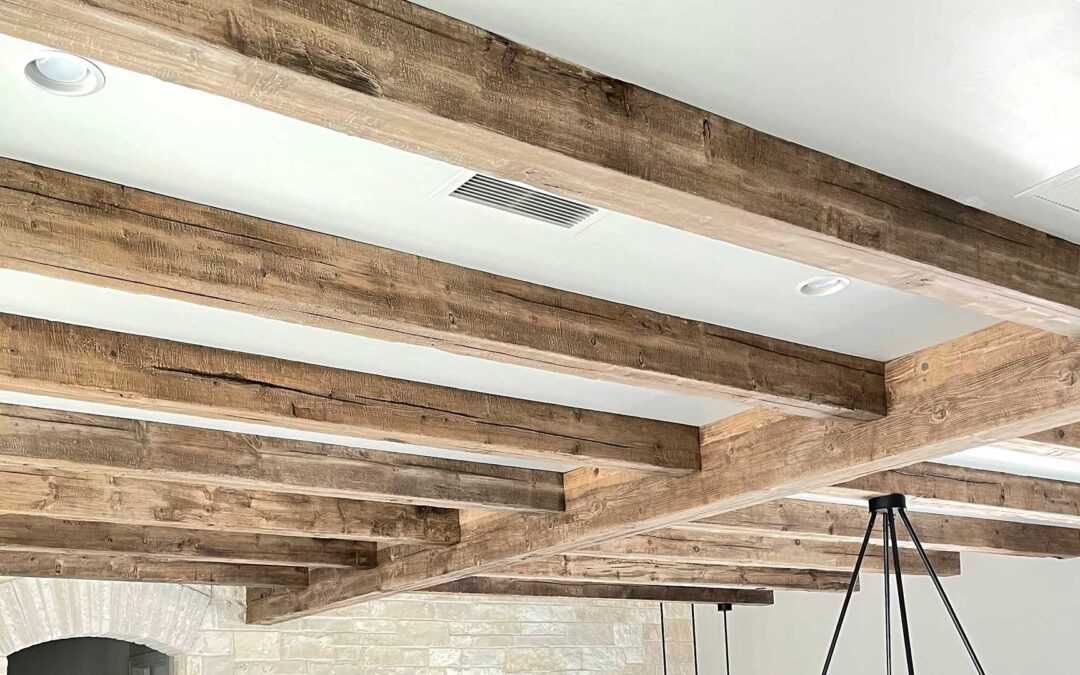
HVAC systems are often the most challenging element to coordinate with decorative ceiling features. Ductwork, returns, and access panels can easily disrupt the clean lines that trusses are meant to create if they aren’t accounted for early.
Because decorative trusses are non-structural, they can often be resized or repositioned to work around mechanical systems—but only if HVAC layouts are known in advance.
To minimize conflicts:
- Identify duct routes and vent locations early
- Keep trusses clear of large trunk lines
- Use linear or slot diffusers near trusses
- Avoid placing trusses over access panels or returns
Installation Timing: Why the Finish Phase Works Best
Decorative trusses are best installed during the finish phase, once the major ceiling work is complete. This timing ensures the trusses are not damaged during earlier construction stages and allows for precise alignment with finished surfaces.
Installing trusses after paint also gives builders greater control over final placement and spacing, ensuring the design intent is fully realized.
Decorative trusses are ideally installed after:
- Drywall and texture
- Ceiling paint
- HVAC rough-in and lighting wiring
Why Builders Prefer Hollow Wood Trusses
Hollow decorative trusses and beams offer both aesthetic and logistical advantages that make them especially attractive for new construction. Their lightweight construction simplifies handling and installation, while their hollow interior provides flexibility for electrical coordination.
From a builder’s perspective, hollow trusses reduce labor complexity while delivering a high-end result that buyers appreciate.
Advantages include:
- Lightweight and easy to install
- No structural reinforcement required
- Flexible sizing to avoid mechanical conflicts
- Ability to conceal wiring
- Faster installation with fewer trades involved
Common Coordination Mistakes to Avoid
Most truss-related issues stem from late-stage decisions or assumptions about how decorative elements interact with other systems. Avoiding these mistakes can save time, reduce callbacks, and preserve design quality.
Common pitfalls include:
- Finalizing lighting layouts without truss coordination
- Running HVAC ductwork through focal ceiling areas
- Skipping backing or blocking
- Treating decorative trusses as an afterthought
- Assuming decorative trusses are structural
Elevate Your New Build
Decorative wood trusses can dramatically elevate a new build—but only when they are coordinated thoughtfully with drywall, lighting, and HVAC systems. With early planning, clear communication between trades, and the right fabrication partner, trusses integrate cleanly into the construction process and deliver long-term visual impact.
Final Thoughts: Wrap Mantels That Help You Sell
For developers and contractors, wrap-around fireplace mantels offer a smart opportunity to elevate the perceived quality of your builds—without driving up costs or complexity. When you want a high-impact architectural feature that buyers will love, you’ll want to choose the right beam company or wood fabricator. Trust the craftsmanship and customization of Green Valley Beams & Truss.
Ready to add decorative wood trusses to your next project?
If you’re planning decorative wood trusses for a new construction project and want a solution designed to coordinate seamlessly with lighting, HVAC, and finished ceilings, Green Valley Beams & Truss can help. We fabricate custom, non-structural wood trusses tailored to your project’s layout and installation needs.