A Complete Guide to Designing a Custom Wood Ceiling System
Vaulted ceilings are architectural statements.
They create openness, height, and drama. But here’s the reality — if you finish them with standard drywall, you lose much of the impact.
A vaulted ceiling deserves a finish that enhances its structure, not hides it. That’s where custom wood ceiling planking transforms the entire space.
This guide walks through:
- Why wood planking is ideal for vaulted ceilings
- Structural and installation considerations
- Species and finish selection
- Design strategies that maximize impact
- Common mistakes to avoid
- Budget expectations
If you’re planning a vaulted ceiling project, this will help you design it correctly from the start.
Why Wood Planking Is Ideal for Vaulted Ceilings
Vaulted ceilings naturally draw the eye upward. That surface becomes one of the most visible architectural elements in the entire home.
Wood planking works exceptionally well because it:
1. Adds Warmth to Large Vertical Spaces
Vaulted ceilings can feel expansive — sometimes even cold. Wood introduces texture and warmth that balances scale.
2. Enhances the Roofline
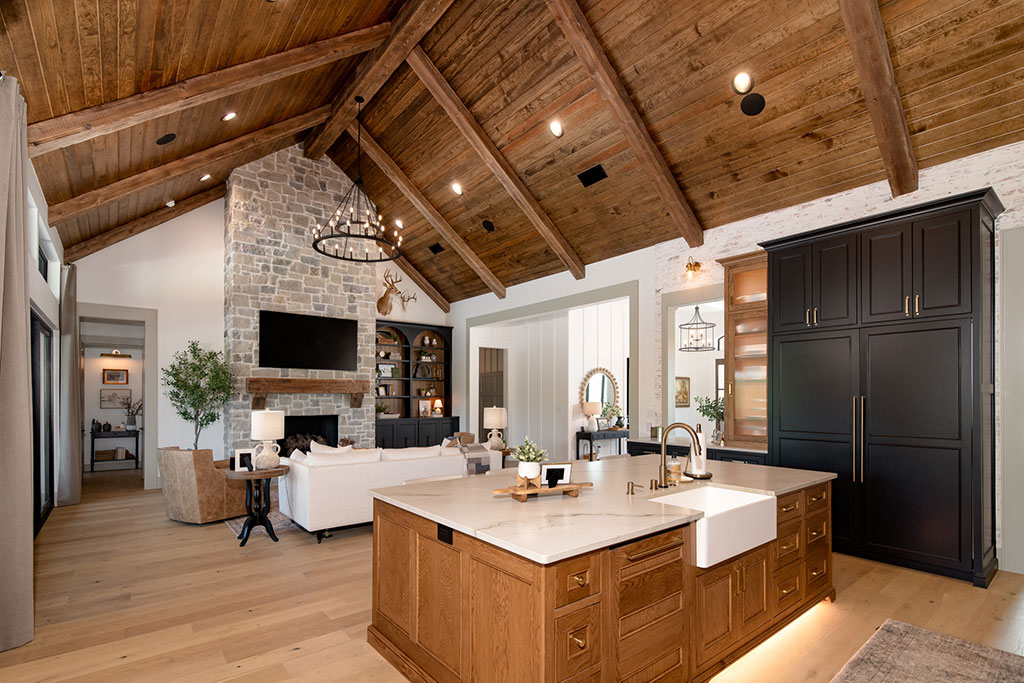
Instead of flattening the pitch visually, planking follows and highlights the slope, creating movement and flow.
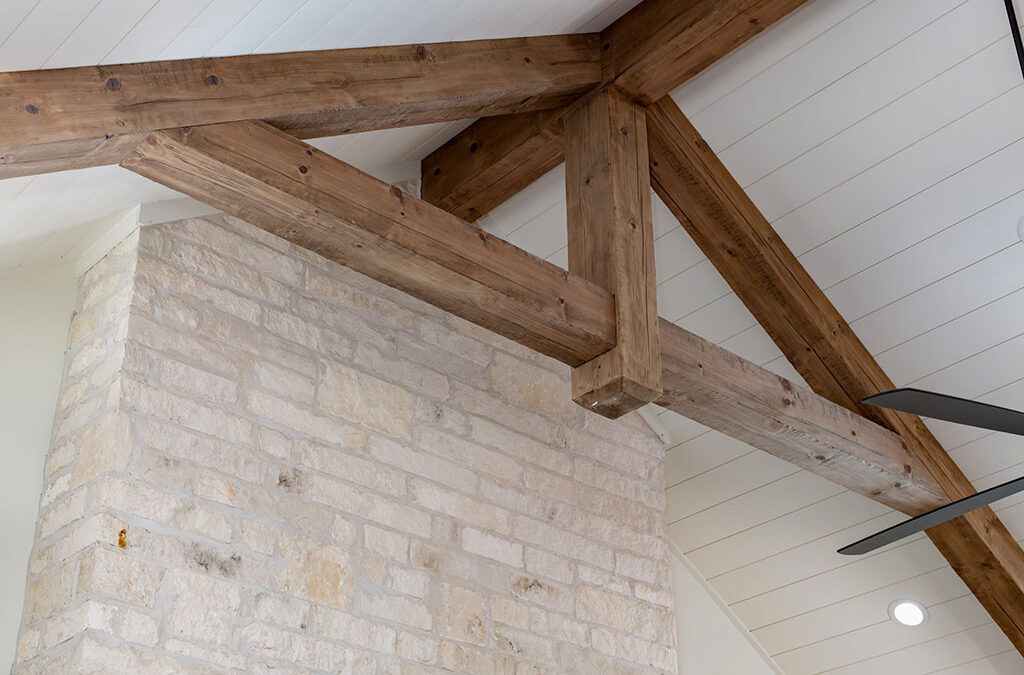
3. Integrates Seamlessly with Decorative Beams
When designed together, planking and beams create a cohesive ceiling system rather than separate elements. Custom fabrication allows proportions, spacing, and species to align intentionally.
4. Elevates Perceived Value
A vaulted wood ceiling feels architectural and intentional. It signals craftsmanship.
Why Custom Fabrication Matters for Vaulted Ceilings
Vaulted ceilings are rarely standard dimensions. Angles vary. Spans vary. Beam spacing varies.
That’s why off-the-shelf solutions often fall short.
Working with a custom fabricator like Green Valley Beams & Truss allows:
- Custom board widths and profiles
- Consistent milling across the entire run
- Coordination with decorative beam layouts
- Species selection specific to the project
- Finish matching across beams and planks
A vaulted ceiling is too visible to compromise with mismatched materials.
Structural Considerations Before Installation
Designing a vaulted wood ceiling correctly begins with structure.
Substrate & Attachment
Wood planking must anchor into:
- Framing members
- Solid sheathing
- Properly installed furring systems
It should never rely solely on drywall for support.
Expansion & Climate Control
Wood moves — especially in ceilings where heat rises.
Proper planning includes:
- Acclimating material before install
- Leaving expansion allowances
- Installing in conditioned spaces
- Considering regional humidity shifts
Vaulted ceilings amplify mistakes because they are highly visible and often heavily lit.
Installation Approaches for Vaulted Ceilings
Vaulted ceilings require more precision than flat ceilings.
Gravity works against installers, and long angled runs demand alignment accuracy.
Common Profile Options
- Tongue & groove
- Shiplap
- Nickel gap
Tongue & groove is often preferred in vaulted applications because it:
- Conceals fasteners
- Provides structural alignment
- Creates a clean, continuous appearance
Because Green Valley fabricates to order, profile depth and reveal can be adjusted to fit the architectural style of the home.
Choosing the Right Wood Species
Species selection influences:
- Weight
- Grain visibility
- Stain absorption
- Overall tone
Pine
Lightweight, versatile, and excellent for farmhouse or transitional styles.
Cedar
Distinct grain character and natural warmth — ideal for cabins or mountain homes.
Oak
Pronounced grain and high-end feel — strong visual presence in contemporary designs.
Custom fabrication allows the ceiling planking to match or complement beam material for a cohesive finish.
Finish Selection for Vaulted Ceilings
Finish choice is amplified in vaulted spaces because of lighting and scale.
Popular Approaches
Natural Clear Finish
Highlights grain and keeps the space bright.
Light Wash or White
Adds texture without darkening the room.
Mid-Tone Stains
Creates warmth and balance in large living areas.
Dark Stains
Dramatic and bold — best paired with strong natural light.
Because finishes can be customized, matching ceiling planks with beams or flooring creates visual harmony.
Design Strategies That Maximize Impact
A vaulted wood ceiling should feel intentional — not accidental.
1. Run Planks Parallel to the Roof Pitch
This enhances vertical movement.
2. Integrate Decorative Beams
Beam spacing should be designed alongside plank layout, not after.
3. Plan Lighting Early
Recessed fixtures, pendants, and uplighting dramatically change how grain texture appears.
4. Consider Scale
Wider planks create a more modern aesthetic. Narrower planks create traditional rhythm.
Custom fabrication gives you control over those proportions.
Common Mistakes to Avoid
Be direct here — vaulted ceilings are not forgiving.
- Installing without proper acclimation
- Fastening only into drywall
- Ignoring expansion gaps
- Mixing inconsistent milling sources
- Choosing a finish too dark for the room’s natural light
Because vaulted ceilings are focal points, small inconsistencies become highly noticeable.
What Does a Custom Vaulted Wood Ceiling Cost?
Costs vary depending on:
- Species
- Profile complexity
- Finish requirements
- Ceiling height
- Installation labor
Material ranges vary nationally, but custom fabrication reflects:
- Precision milling
- Species quality
- Finish customization
- Project coordination
Labor costs are typically higher for vaulted ceilings due to:
- Height access
- Scaffolding
- Angle cutting
- Installation precision
However, compared to other architectural ceiling treatments (coffered systems, custom millwork), wood planking often delivers the highest visual impact per dollar invested.
Is Wood Planking Worth It for a Vaulted Ceiling?
If you’ve invested in vaulted architecture, finishing it properly matters.
Custom wood planking:
- Elevates the structural design
- Adds warmth and depth
- Creates architectural continuity
- Enhances resale appeal
It turns the ceiling from an afterthought into a defining feature.
Designing Your Custom Vaulted Ceiling System
Every vaulted ceiling is different. That’s why custom fabrication matters.
When planning your project, consider:
- Ceiling pitch and span
- Desired plank width
- Species selection
- Finish tone
- Beam integration
- Lighting plan
A coordinated ceiling system ensures planks and beams feel unified — not pieced together.
If you’re planning a vaulted ceiling project, the best next step is to explore custom wood planking options and discuss your layout, species, and design goals with a fabrication team who builds to specification.
Learn more about custom wood planking from Green Valley Beam & Truss.