Cost, Appearance & Long-Term Value of Hollow Beams for Your Home or Commercial Project.
Decorative ceiling beams have become one of the most sought-after architectural upgrades in modern homes, custom builds, and commercial interiors. From warm rustic farmhouses to sleek contemporary spaces, wood beams create depth, character, and visual warmth that instantly elevate a room. But as homeowners and builders begin planning their projects, one important question usually comes up fairly quickly: are hollow beams actually worth it?
For most decorative applications, the answer is yes.
Custom hollow beams provide the look of large solid timber beams while avoiding many of the drawbacks that come with installing massive structural wood members. They are lighter, easier to install, more cost-effective, and far more flexible for modern construction and remodeling projects. In many cases, hollow beams deliver nearly the same visual impact as solid wood beams while reducing labor costs, structural requirements, and installation complexity.
At Green Valley Beams & Truss, custom decorative hollow beams are built using real wood and fabricated specifically for each project. That means homeowners and contractors can achieve the appearance of substantial architectural beams without unnecessary weight or structural complications.
What Are Hollow Beams?
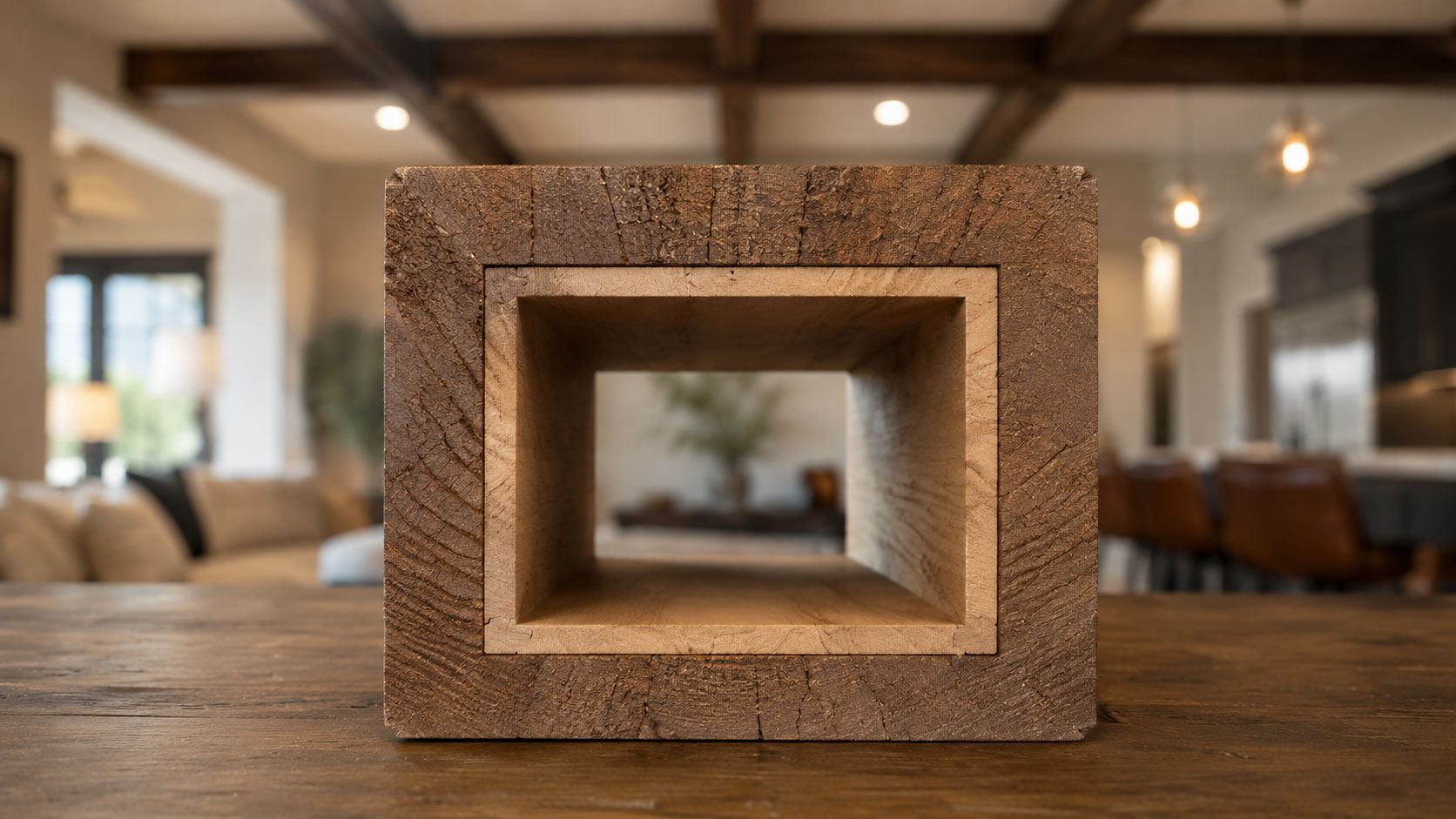
Hollow beams, often referred to as box beams or faux wood beams, are decorative wood beams designed to mimic the appearance of solid timber beams. Rather than being carved from one massive piece of wood, hollow beams are fabricated from real lumber and assembled into a three-sided or four-sided beam structure. Once installed, they create the same visual effect as large solid beams while remaining dramatically lighter and easier to work with.
Unlike cheap foam imitation beams, real wood hollow beams provide authentic grain patterns, natural stain absorption, and realistic texture. Because they are made from real wood, they also allow for custom finishes, distressing techniques, and stains that create a far more believable and upscale appearance.
Hollow beams are commonly used in:
- Living rooms
- Kitchens
- Vaulted ceilings
- Great rooms
- Entryways
- Outdoor living areas
- Commercial interiors
If you are still comparing beam types, check out Solid vs. Hollow Ceiling Beams – What Builders Need to Know for a deeper breakdown of the differences.
Why Hollow Beams Have Become So Popular
Decorative ceiling beams have exploded in popularity over the past decade because they instantly create a more custom, finished appearance. Even relatively simple spaces can feel dramatically more upscale once architectural wood elements are added to the ceiling.
Part of the appeal comes from the fact that beams naturally add warmth and texture to spaces that might otherwise feel flat or overly modern. Open-concept homes, tall ceilings, and large living spaces especially benefit from the visual balance that decorative beams provide.
At the same time, homeowners and builders have become more practical about construction costs and installation efficiency. While solid timber beams certainly have their place, they often introduce major structural challenges that are unnecessary for decorative applications. Hollow beams solve many of those issues while still delivering the same high-end look.
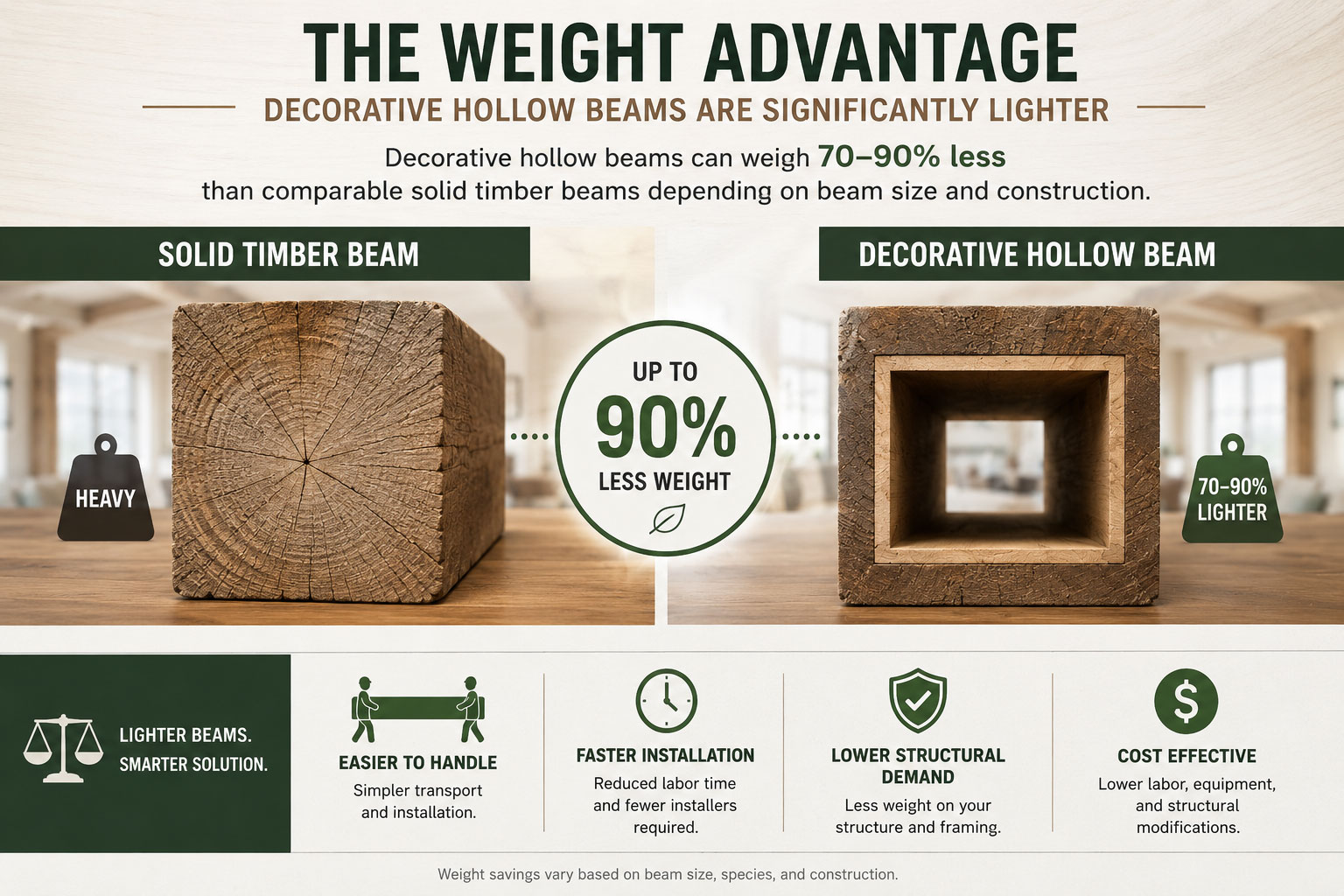
Hollow Beam Cost vs. Solid Timber Cost
One of the biggest reasons homeowners choose hollow beams is the cost advantage. While beam pricing varies depending on size, finish, and installation requirements, hollow beams are generally far more affordable than solid wood beams once the full project scope is considered.
The savings do not simply come from the beam material itself. Solid timber beams often create additional expenses throughout the project. Large solid beams may require structural reinforcement, engineering review, special lifting equipment, or additional framing support. Those costs can add up quickly, especially in remodels or vaulted ceiling applications.
Hollow beams eliminate many of these concerns because they are designed as decorative architectural features rather than load-bearing structural members.
Several factors contribute to the lower overall cost of hollow beams:
- Less raw material is required
- Shipping and handling costs are lower
- Installation is typically faster
- Structural reinforcement is often unnecessary
- Smaller crews can handle installation
For builders trying to stay on schedule and homeowners trying to maximize budget, these advantages matter significantly.
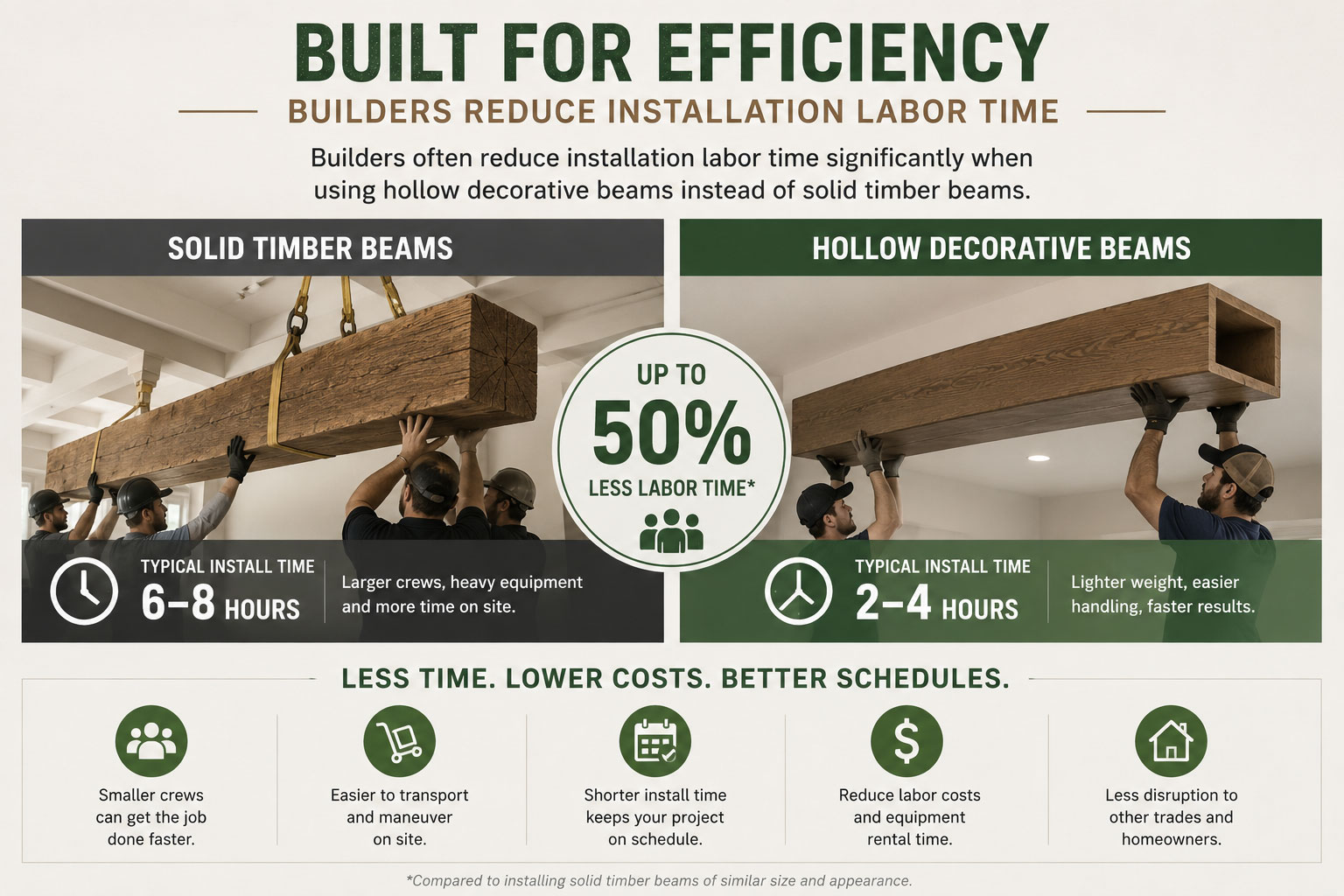
Typical Factors That Affect Hollow Beam Pricing
Although hollow beams are generally more affordable than solid timbers, pricing can still vary substantially depending on the project. Custom decorative beams are fabricated to fit the exact dimensions and design requirements of each space, so several variables influence the final cost.
Beam size is one of the biggest factors. Larger beams naturally require more material and additional fabrication time. Long-span beams may also involve more complicated transportation and installation considerations.
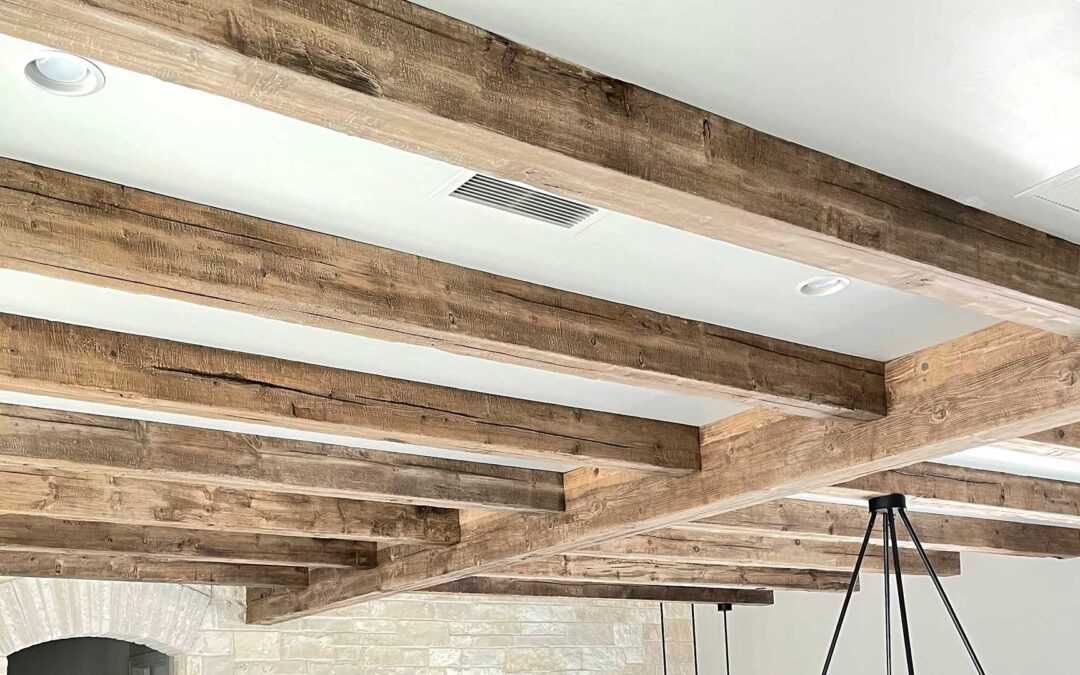
Finish details can also impact pricing. Simple smooth beams are generally more affordable than heavily distressed or hand-hewn styles. Many homeowners prefer custom finishes that include saw marks, wire brushing, weathering techniques, or stain matching to coordinate with flooring, cabinetry, or furniture.
Explore available finish options on the Beam Styles Page.
Installation complexity is another important consideration. Flat ceilings are typically more straightforward, while vaulted ceilings, beam grids, and tall open-concept spaces may require additional labor or planning.
Some custom features that can affect pricing include:
- Hand-hewn distressing
- Custom stain matching
- Metal straps or hardware
- Mitered beam wraps
- Integrated lighting access
- Oversized beam dimensions
Because every project is different, custom fabrication allows homeowners and builders to balance appearance, budget, and installation requirements more effectively.
Why Builders Prefer Hollow Decorative Beams
Many builders today actively recommend hollow beams instead of solid timbers for decorative applications. The reason is fairly simple: hollow beams are more practical for modern construction.
Installation is one of the biggest advantages. Solid timber beams are extremely heavy and often require specialized equipment or larger installation crews. Hollow beams are significantly lighter, making them easier to transport, maneuver, and install on-site.
That flexibility becomes especially important in:
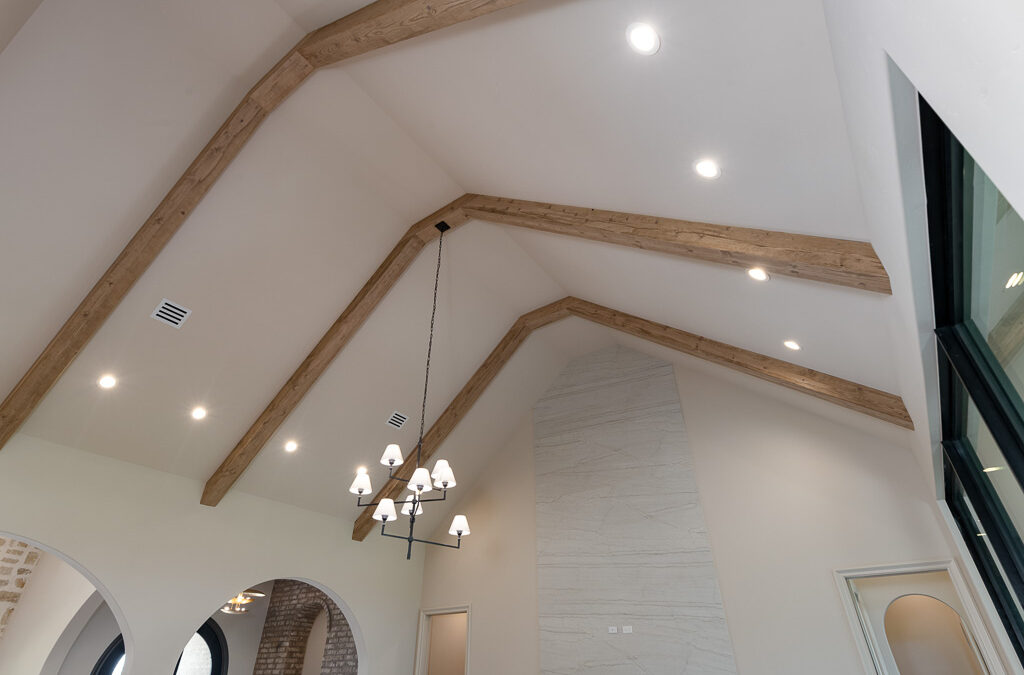
- Vaulted ceilings
- Two-story living rooms
- Remodel projects
- Large open-concept homes
- Commercial spaces
Builders also appreciate the fact that hollow beams simplify coordination with other trades. Electrical wiring, lighting components, and certain low-voltage systems can often be concealed inside hollow beam cavities, helping create cleaner finished ceilings.
Learn more in Installing Electrical Inside Hollow Beams: A Hidden Benefit.
Another major advantage is design flexibility. Hollow beams allow designers and homeowners to create the appearance of massive architectural beams without introducing unnecessary structural challenges. This makes it possible to achieve dramatic ceiling designs that may not be practical with solid timber construction.
For additional inspiration, explore Choosing the Right Type of Ceiling Beams.
Do Hollow Beams Look Real?
This is probably the most common concern homeowners have when they first hear the term “hollow beam.” Many people assume hollow beams must look artificial or cheap, but that is usually only true with low-quality foam imitation products.
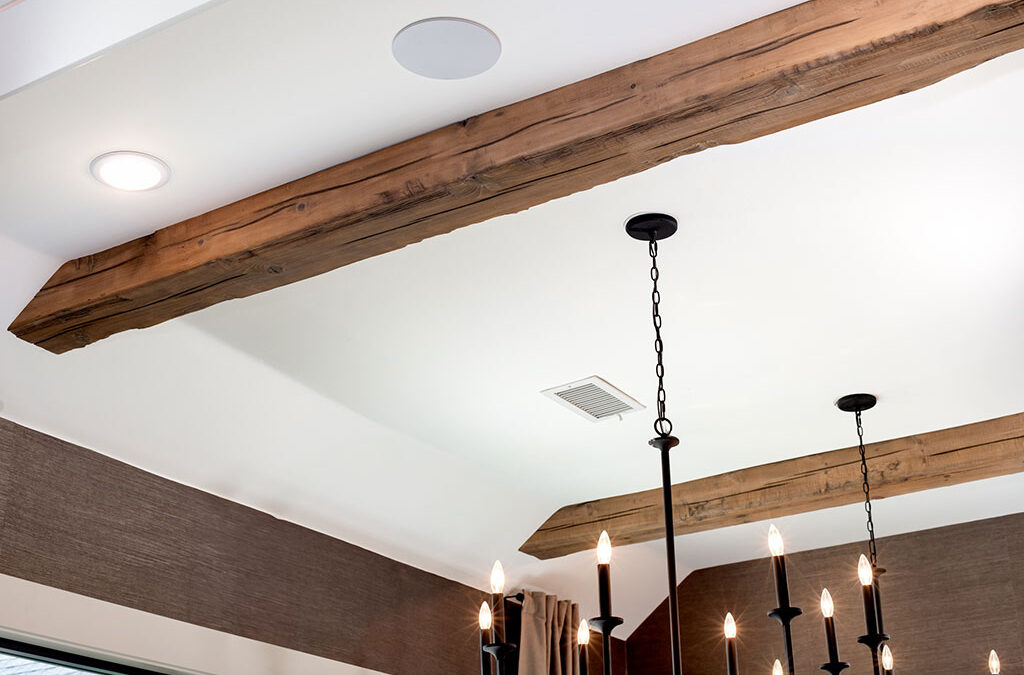
High-quality hollow beams fabricated from real wood can look virtually identical to solid beams once installed. Because they use authentic lumber, they retain natural grain patterns, realistic stain absorption, and true wood texture.
At Green Valley Beams & Truss, hollow beams are custom built using real wood and finished specifically for each project. The result is a beam system that feels substantial, architectural, and authentic.
In fact, most people would never know a decorative beam is hollow simply by looking at it after installation.
Long-Term Value of Hollow Beams
Decorative wood beams do more than improve the appearance of a room. They also contribute to the long-term visual and perceived value of a property.
Architectural ceiling details consistently help homes feel more custom and upscale. In real estate photography, exposed beams often become one of the defining visual features of a space. They help create memorable interiors that stand out from standard builder-grade homes.

Decorative beams also tend to age well stylistically. Unlike short-lived design trends, wood architectural elements have remained desirable across many different home styles for decades.
Hollow beams work beautifully in:
- Farmhouse interiors
- Rustic modern homes
- Transitional spaces
- Contemporary ranch homes
- Mountain-style architecture
- Mediterranean interiors
- Commercial hospitality spaces
That versatility gives decorative beams long-term staying power both aesthetically and financially.
Are Hollow Beams Worth It for Remodels?
Remodel projects are often where hollow beams provide the greatest value. Retrofitting solid timber beams into an existing structure can become extremely expensive because of framing limitations, access challenges, and structural reinforcement requirements.
Hollow beams allow homeowners to completely transform ceilings without major structural reconstruction. This makes them ideal for updating older homes or adding architectural interest during renovations.
They are especially popular in:
- Kitchen remodels
- Living room renovations
- Ranch home updates
- Open-concept conversions
- Commercial remodels
Because hollow beams are lighter and easier to install, they often provide a dramatic visual upgrade without the cost and disruption associated with structural timber installation.
All-In-All, Are Hollow Beams Worth It?
For most decorative ceiling applications, hollow beams are absolutely worth the investment. They provide the warmth, character, and visual impact of large wood beams while avoiding many of the practical challenges associated with solid timber construction.
Homeowners benefit from lower installation costs, easier remodel integration, and greater design flexibility. Builders benefit from reduced labor, simplified installation, and fewer structural complications. Most importantly, high-quality hollow beams fabricated from real wood still deliver the authentic architectural appearance people want.
When properly designed and installed, decorative hollow beams create timeless spaces that feel warmer, more custom, and significantly more refined.
Ready to Add Custom Hollow Beams to Your Project?
Green Valley Beams & Truss designs and fabricates custom decorative wood beams for homeowners, builders, designers, and commercial projects throughout the Dallas-Fort Worth area and beyond. Whether you are planning a modern living room, a vaulted ceiling upgrade, or a large-scale commercial project, the team can help you create a custom beam design that fits your space perfectly. Contact Green Valley Beams & Truss today to request a quote and explore custom beam options for your project.